

Tan Thanh – Ke Ga: Creating A Destination From Local Values
A cultural coastal tourism development approach rooted in the daily rhythm of the fishing village, community spaces, and the iconic Ke Ga Lighthouse. Some coastal areas do not need an entirely new story to be told, because their story already exists in the rhythm of everyday life: boats returning at dawn, fish markets still carrying the scent of the sea, the cadence of village life, and the lighthouse quietly standing there through generations. It is precisely these seemingly familiar elements that create a distinctive identity one that makes a place memorable not only for its landscape, but also for the emotions and memories it leaves behind.
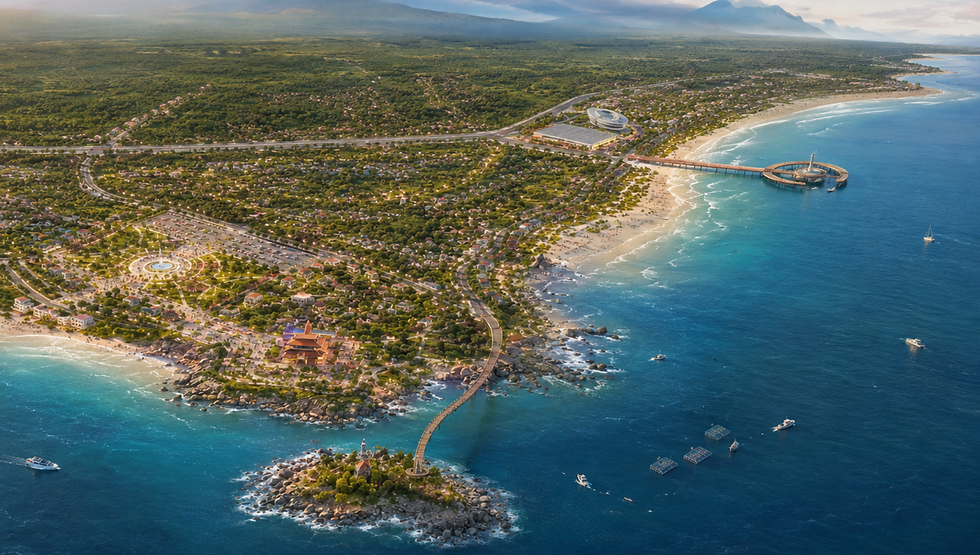
For Tan Thanh – Ke Ga, APA Consultant believes that development potential lies not only in beautiful scenery or a coastal location rich in advantages. More importantly, it lies in turning existing local values into the foundation for a new destination where tourism, commerce, public space, and community life can grow together without erasing the identity that gives this place its appeal. This is also the starting point for APA’s proposal on the orientation for forming the Tan Thanh – Ke Ga Coastal Cultural Tourism Complex.
“Tourism does not stand apart from local life. Local life itself becomes part of the experience.”
This spirit was also presented by APA at the working session on 06 August 2026 with the Standing Committee of the Tan Thanh Commune Party Committee and representatives of relevant agencies and units, within the framework of research on development orientation for the Mui Dien – Ke Ga area.
At the meeting, APA introduced several key proposals, including the organization of a coastal square, an orientation for developing the fish market in connection with community activities and tourism, and research on a connection to Ke Ga Lighthouse in order to gradually form a continuous experiential journey across the entire area.
From a coastal area to a distinctive experience chain
Tan Thanh – Ke Ga brings together many layers of value typical of a coastal area: the sea, fishing livelihoods, fish markets, port spaces, community life, and especially Mui Ke Ga – Ke Ga Lighthouse, a landmark rich in scenic value and local identity.
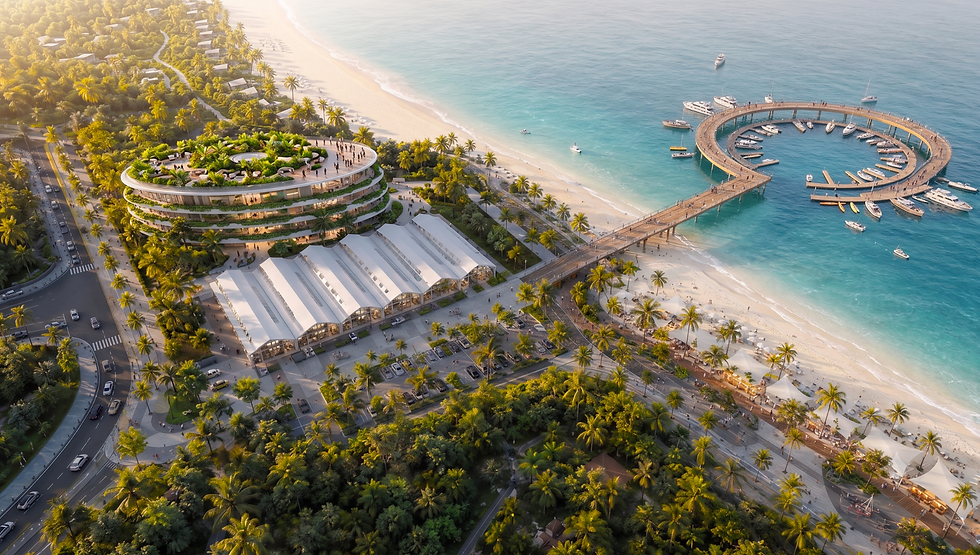
The appeal of a destination does not lie only in the number of places worth visiting. What creates long-term value is the ability to organize existing resources into a seamless journey, where each stop has its own story while also complementing the others encouraging visitors to explore more deeply, stay longer, and more clearly feel the spirit of the place.
On that basis, APA proposes shaping Tan Thanh - Ke Ga as a continuous chain of coastal experiences. In this structure, the Tan Thanh Port Fish Market continues to maintain its established role in the local economy and residents’ lives, while also being expanded in value as a cultural touchpoint where visitors can directly feel the pulse of the seaside village.
Along the coastline, a unified overall arrangement can be formed through squares, walking routes, food areas, night markets, resting points, and community spaces. Each component does not exist as an isolated structure, but together contributes to a flow of activities throughout the day serving local residents while also enriching visitors’ journeys. The new day can begin with the sound of boats docking, the first catches of fish, and the bustle of the market. Daytime opens out to the sea, natural scenery, and coastal promenades. As evening falls, the square, cuisine, night market, and community activities continue to animate the area, so that Tan Thanh – Ke Ga becomes not merely a place to pass through, but a destination with its own rhythm, memories, and identity.
A new connection with Ke Ga's existing symbol
One idea that APA is particularly interested in is the study of a connection between the Tan Thanh Port Fish Market area and Mui Ke Ga – Ke Ga Lighthouse through a pedestrian bridge or another suitable landscape connection.
This idea is not simply intended to shorten the distance between the two locations. If carefully studied in terms of landscape, engineering, environment, and legal conditions, it could become a marine experiential route, creating a new perspective toward Ke Ga Lighthouse while also forming a distinctive identity for the whole area.
More importantly, this connection could help draw visitor flows which are currently concentrated at only a few attractions closer to residential areas, the fish market, service activities, and local life. In that way, tourism value would not remain concentrated in a single point, but would have the opportunity to spread more broadly throughout the community.

Developing tourism with community involvement
This is also an issue that APA pays particular attention to when researching local development models. A project may create beautiful structures. But a destination only gains lasting vitality when the local community can find its place within that development process. For Tan Thanh – Ke Ga, fishing livelihoods, the fish market, coastal cuisine, and the rhythm of local life are not elements that should be displaced to make room for tourism. On the contrary, these are precisely the values capable of creating distinction.
Therefore, APA’s orientation focuses on harmonizing tourism development with existing livelihoods. Fishing activities should continue to be respected; new spaces should help improve the landscape environment and the community’s operating conditions, while also creating additional opportunities for commerce, services, cuisine, and local economic models. When local people are not merely standing outside and observing development, but are able to participate directly and benefit from it, a new destination can take shape in a sustainable way.

From a good idea to a project that can take shape
A development orientation is only truly meaningful when there is a pathway to gradually turn it into reality. In addition to planning and design research, APA aims to accompany the locality in connecting socialized resources, promoting investment, and finding capable partners suitable for each project group.
The approach is not to develop the entire area all at once, but to identify catalytic elements that can create early change: improving public spaces, enhancing the value of the fish market port area, forming coastal commercial and experiential activities, and gradually studying larger connections. Each step should create practical value for the locality and become the foundation for the next.

APA’s proposal follows one consistent journey: not to create a different Ke Ga, but to open up new development possibilities from the very values that have shaped this place. Development does not necessarily mean changing what already exists; rather, it means continuing the values that deserve to be preserved, opening up new possibilities, and allowing the community to help shape the future of its own land.
Because a memorable destination is not only a place people want to visit. It is also a place
that local people still want to call home


Comments